The Qosh Tepa Canal and Central Asia’s Emerging Water Security Challenge

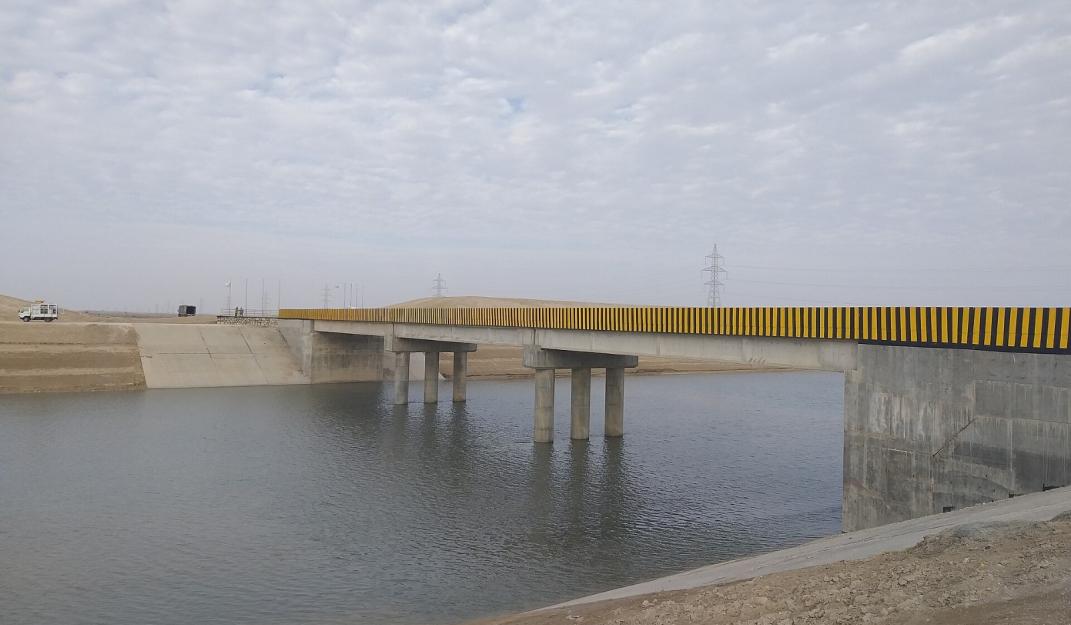
The Qosh Tepa Canal (QTC) in northern Afghanistan is one of the largest infrastructure projects in the country’s modern history. It is, at its core, a governance story. Afghanistan sits outside every regional water-sharing framework, and because the Taliban government remains diplomatically unrecognized, no treaty, court, or institution exists that can compel Kabul to coordinate construction, share hydrological data, or negotiate allocations with the downstream states. That governance vacuum is what turns a domestic irrigation project into a regional security challenge as it allows an unprecedented, unilateral diversion of shared water to proceed at precisely the moment Central Asia’s river systems, already strained by decades of climate stress, are least able to absorb the loss. This article argues that the real danger of the Qosh Tepa Canal is not the canal itself, but the absence of rules governing it. As Afghanistan expands its use of the Amu Darya to revive its agricultural economy, Central Asian states face growing environmental and economic pressures without a regional mechanism capable of managing the consequences.
The QTC, with the lengths of 285 kilometers and 8.5 kilometers deep, stretches from the Amu Darya River in Balkh Province to Andkhoy District in Faryab Province undertaking in northern Afghanistan. The idea of the canal is not new as it was first proposed in the 1970s by Afghanistan’s first president, Mohammed Daud Khan, who recognized that the drought-prone provinces of northern Afghanistan could become productive agricultural land with reliable access to the Amu Darya. For decades the project remained a distant development concept until the Taliban’s return to power in 2021 elevated it to a “national goal” and centerpiece of economic and agricultural policy. Construction accelerated accordingly: by March 2025 the canal had reached 230 kilometers, and by mid-2026 management of the completed first stage passed from the National Development Company of Afghanistan to the country’s Administrative Office, marking the completion of the initial stage of the project. The pace of that progress is precisely what makes the absence of external oversight consequential: the faster the canal is built, the less time the region has to construct the legal architecture that, until now, its absence has made possible to ignore.
Read the full analysis by Aytac Mahammadova at The Hague Research Institute.
Photo“Qosh tepa canal 1” by Bek1998, via Wikimedia Commons, CC BY-SA 4.0. Cropped.
The Hague Research Institute
The Hague Research Institute is an independent non-profit think-tank. Our goal is to provide both local and international audiences with clear policy analysis, opinion articles, and research about Europe’s connections with the South Caucasus and Central Asia.