Has the Netherlands’ Approach towards EU Enlargement Changed after Russia’s Full-Scale Invasion of Ukraine?

Russia’s full-scale invasion of Ukraine has brought EU enlargement back on the agenda. The revival of the enlargement process was evident in the swift and unprecedented decision to grant EU candidate status to Ukraine, Moldova, and subsequently Georgia, thereby offering them a long-desired prospect of membership. In parallel, the enlargement process for the Western Balkan countries was reinvigorated with the start of accession negotiations with Albania and North Macedonia in July 2022, and with Bosnia and Herzegovina obtaining candidate status in December 2022. These developments have prompted scholars to argue that the rationale for pursuing EU enlargement has become more explicitly geopolitical, with key decision-makers viewing it as a strategic investment in Europe’s security and stability. How are these changing motives reflected in the domestic political debate on EU enlargement within member states? As member state parliaments would need to ratify accession treaties, it is worth exploring how they have come to perceive and frame EU enlargement.
In this context, the Netherlands presents a paradoxical case: despite its conventional critical and sceptical stance on enlargement, it supported the EU’s historic enlargement decisions after February 2022. The article argues that Russia’s full-scale invasion of Ukraine fundamentally changed how Dutch political parties understand EU enlargement, but it did not eliminate the Netherlands’ traditional insistence on strict accession conditionality.
Read the full analysis by Niels van der Togt at The Hague Research Institute.
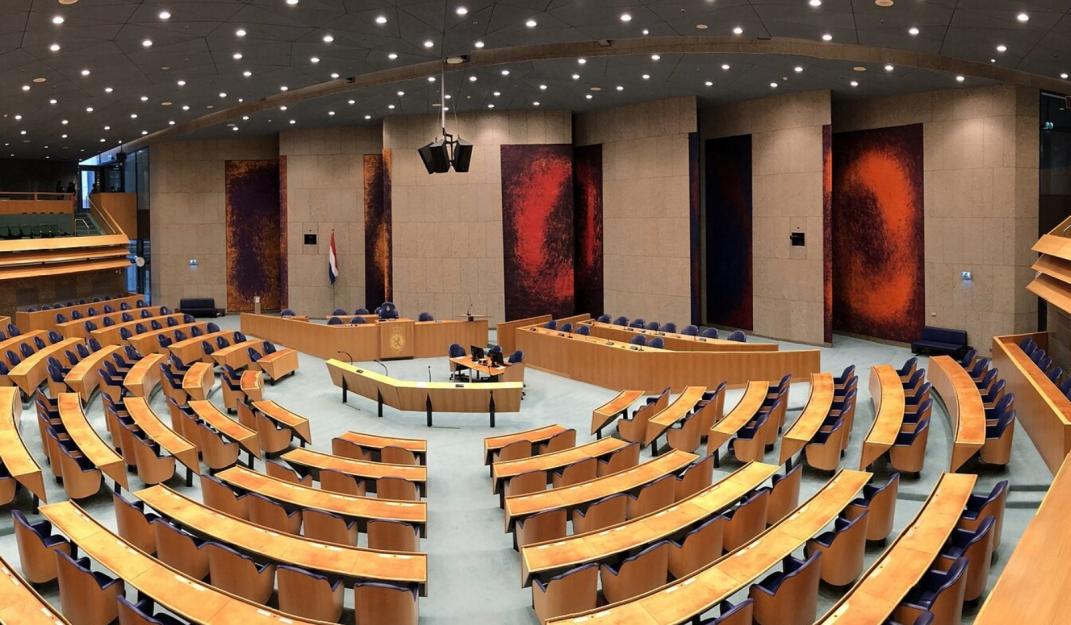
Photo“Plenaire zaal Tweede Kamer - panorama” (Plenary hall of the House of Representatives, panorama) by Husky, via Wikimedia Commons, CC BY 4.0. Cropped.

The Hague Research Institute
The Hague Research Institute is an independent non-profit think-tank. Our goal is to provide both local and international audiences with clear policy analysis, opinion articles, and research about Europe’s connections with the South Caucasus and Central Asia.