We’re thrilled to announce the hybrid Winter School Energy Security and the Geopolitics of Critical Raw Materials in Key Maritime Zones, 12-14 January 2026. We will focus on the Caspian Sea, the Black Sea and the Arctic Sea during the Winter School.
On November 4, Dr Olga Zeveleva (Assistant Professor in Conflict Studies, Utrecht University) will speak on "Colonialism and Authoritarianism - Russia’s imperial ambitions abroad and repressive politics at home."
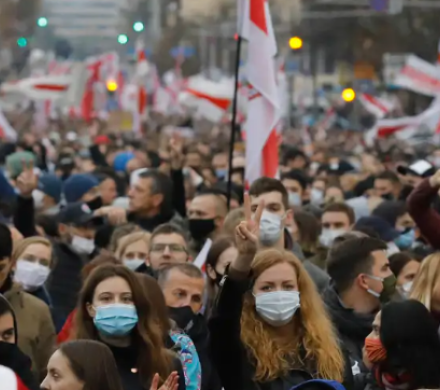
Sviatlana Tsikhanouskaya, leader of the Belarusian democratic opposition, delivers the ninth October Lecture in Amsterdam on Belarus’s struggle for freedom and its pivotal role in Europe’s security.
At 'Belarus in Focus,' the University of Amsterdam's Slavic Department, Study Association Radost, and the Dutch diplomatic representation in Minsk join forces to boost attention for the country, with short talks, film clips, and a panel discussion.
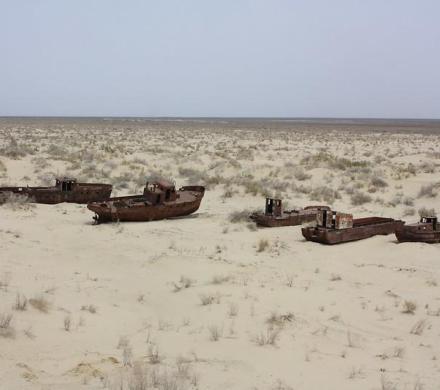
Unequal water distribution, infrastructure problems, the legacy of Soviet-era water management systems and other issues have heightened competition over water resources in Central Asia. These challenges are further exacerbated by climate change and population growth, threatening agricultural production and food security, energy generation, and overall socio-economic development across Central Asia. What can Europe and the international community do to address these challenges?
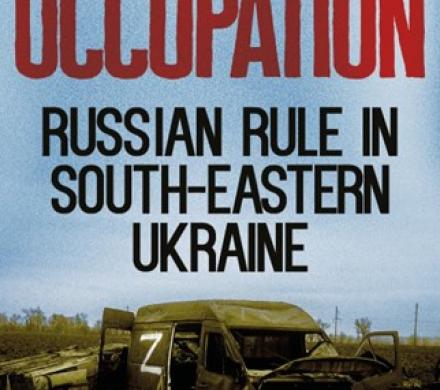
In this talk, held on the occasion of the publishing of his book on the subject, professor David Lewis of the University of Exeter will explain how Russia seeks to subjugate and ‘re-format’ the occupied parts of the Donetsk, Luhansk, Kherson and Zaporizhzhia provinces through a mixture of violent repression, political engineering, collaborationism, economic coercion and propaganda.
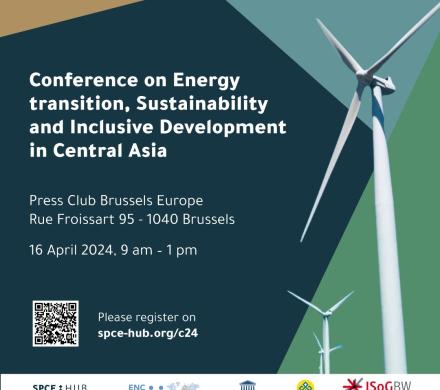
Europe and Central Asia are linked by decades of commodity trade, but also by developing climate cooperation. Yet Central Asia plays a limited role in the European public debate on global climate change and energy transition.
Abkhaz, Armenians, Azerbaijani and Georgians have long co-existed in a region framed as the South Caucasus. These different ethnic categories result from socio-political constructions that are rarely questioned. Playing a pivotal role in the wars that have unfolded in the region, ethnic categorization is particularly central in shaping current antagonizations
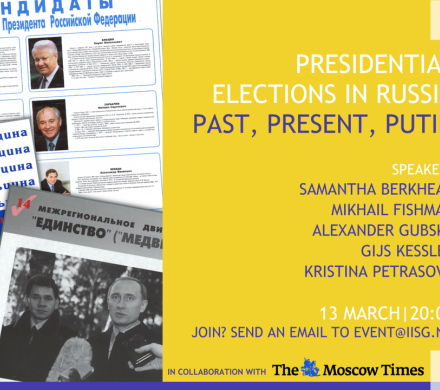
On March 13 the IISH and the Moscow Times jointly organize an event to reflect on Russia's presidential elections, past, present and future. With presentations by Gijs Kessler and Mikhail Fishman, followed by a panel discussion with Samantha Berkhead, Alexander Gubsky, and Kristina Petrasova.
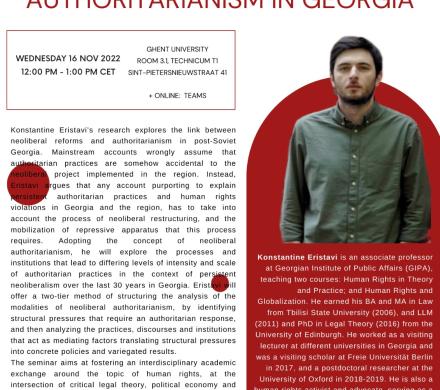
Konstantine Eristavi’s research explores the link between neoliberal reforms and authoritarianism in post-Soviet Georgia. Mainstream accounts wrongly assume that authoritarian practices are somehow accidental to the neoliberal project implemented in the region.