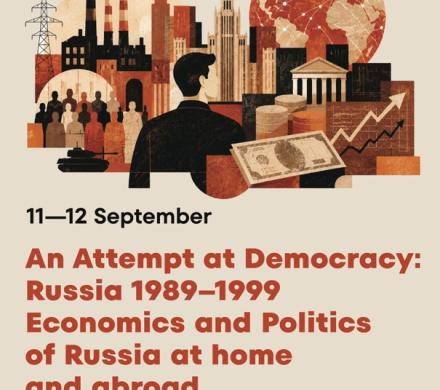
This European lecture series explores politics, society, economics, history, culture, and media in Russia during the transformative decade of the 1990s.
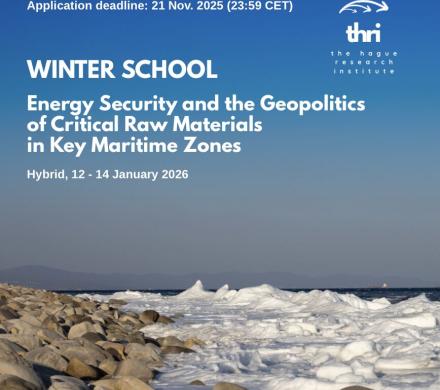
We’re thrilled to announce the hybrid Winter School Energy Security and the Geopolitics of Critical Raw Materials in Key Maritime Zones, 12-14 January 2026. We will focus on the Caspian Sea, the Black Sea and the Arctic Sea during the Winter School.
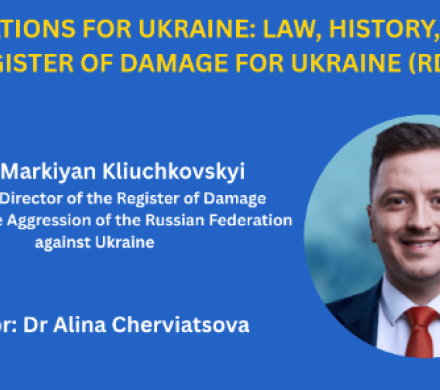
We are pleased to welcome Markiyan Kliuchkovskyi, Executive Director of the Register of Damage Caused by the Aggression of the Russian Federation against Ukraine, for a public lecture on the legal, historical, and institutional foundations of reparations efforts in response to Russia’s war against Ukraine.
Faculty Board Room (Lokaal 2.1), Faculty of Law and Criminology, Ghent University
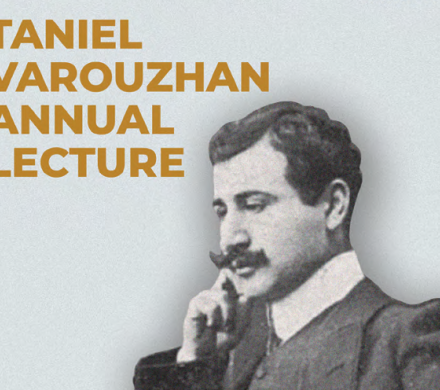
The Centre of Western Armenian Studies and Ghent University are delighted to present this year's Taniel Varouzhan Annual Lecture, which will be held at Ghent University.
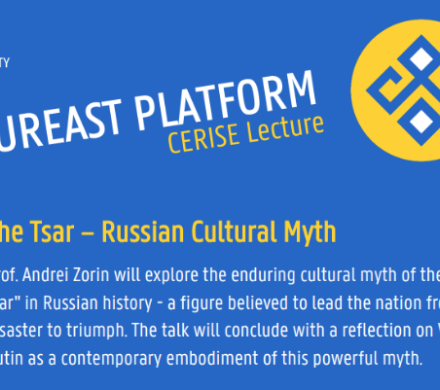
Prof. Andrei Zorin will explore the enduring cultural myth of the "true tsar" in Russian history - a figure believed to lead the nation from disaster to triumph. The talk will conclude with a reflection on Vladimir Putin as a contemporary embodiment of this powerful myth.
Auditorium Vandenhove, Paviljoen Charles Vandenhove, Campus Boekentoren
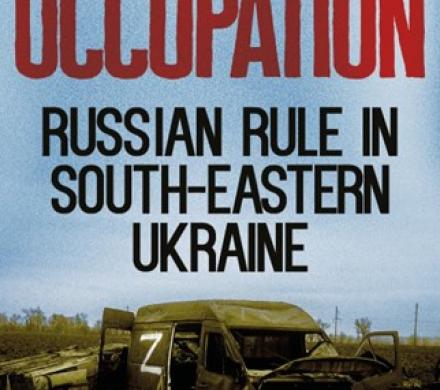
In this talk, held on the occasion of the publishing of his book on the subject, professor David Lewis of the University of Exeter will explain how Russia seeks to subjugate and ‘re-format’ the occupied parts of the Donetsk, Luhansk, Kherson and Zaporizhzhia provinces through a mixture of violent repression, political engineering, collaborationism, economic coercion and propaganda.
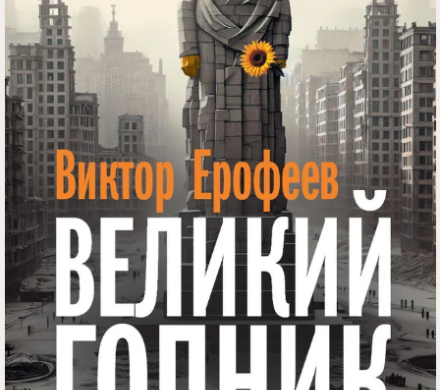
Yerofeyev, whose novels include the infamous "Russian Beauty" (1990) and "The Good Stalin" (2004), began work on his "horror comedy" before the war, but did not publish it until October 2024. On 13 February, the writer will be in Ghent to talk about the role of culture and literature in contemporary Russia.
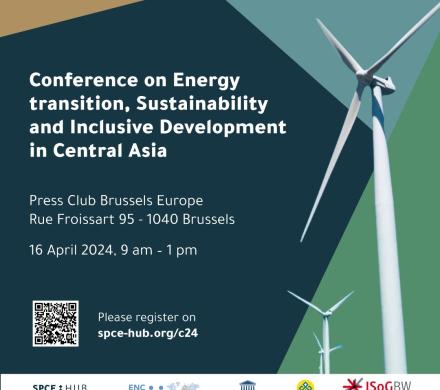
Europe and Central Asia are linked by decades of commodity trade, but also by developing climate cooperation. Yet Central Asia plays a limited role in the European public debate on global climate change and energy transition.
Abkhaz, Armenians, Azerbaijani and Georgians have long co-existed in a region framed as the South Caucasus. These different ethnic categories result from socio-political constructions that are rarely questioned. Playing a pivotal role in the wars that have unfolded in the region, ethnic categorization is particularly central in shaping current antagonizations
During the lecture, the speaker Dr. Kseniya Oksamytna (City University of London) will present her article “Imperialism, supremacy, and the Russian invasion of Ukraine” published in Contemporary Security Policy in 2023.